Why Pebble Finishes Dominate in Florida
In Southwest Florida's environment — 365-day UV exposure, warm water temperatures, high-calcium water, and universal salt chlorine systems — standard plaster simply cannot perform long-term. Pebble finishes were engineered to thrive in exactly these conditions.
3-4x Longer Lifespan
15-25+ years vs. plaster's 5-8 years. In Florida's harsh conditions, this difference is even more pronounced.
Superior Stain Resistance
Natural pebble surfaces don't absorb minerals the way porous plaster does. Iron, copper, and organic stains stay on the surface where they can be treated.
Color That Lasts
Natural stone pebbles don't fade from UV exposure. The color you choose on day one is the color you'll have 20 years later.
StoneScapes™ Color Blends
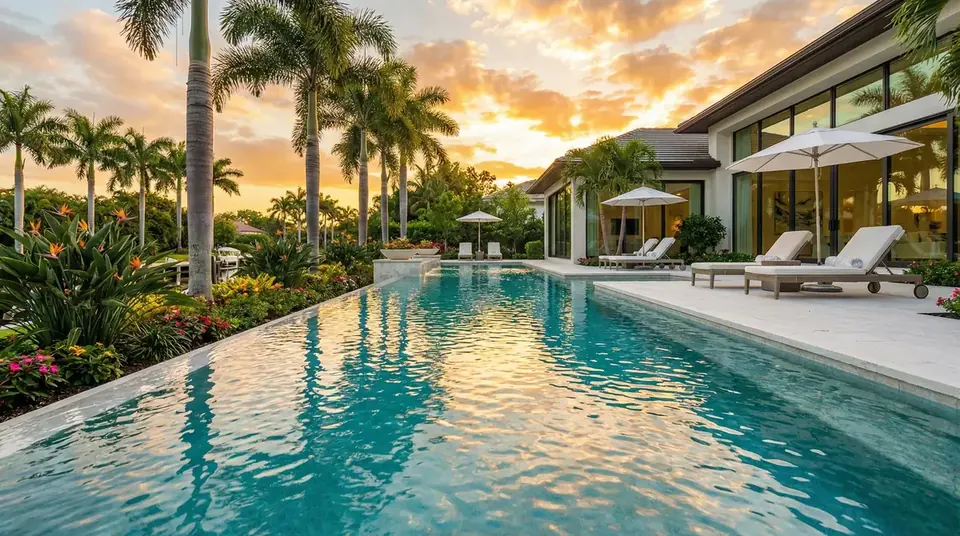
NPT's StoneScapes™ line offers a range of natural pebble blends, each creating a distinct water color and pool character. We are certified StoneScapes™ applicators.
Note: Actual water color depends on pool depth, sunlight angle, surrounding landscape, and water chemistry. Physical samples and local pool visits provide the most accurate preview.
Mini Pebble — Aqua Blue
Water Color: Vibrant Caribbean blue
Bright, tropical, classic resort feel. The most popular choice for homeowners wanting that iconic Florida blue.
Mini Pebble — Tahoe Blue
Water Color: Deep sapphire blue
Rich, deep blue reminiscent of mountain lake clarity. Dramatic and elegant in larger pools.
Mini Pebble — Puerto Rico Blend
Water Color: Tropical turquoise-green
Warm turquoise with green undertones. Creates a natural lagoon appearance, especially in shallow areas.
Mini Pebble — Bali
Water Color: Medium blue-green
Balanced blue-green that shifts with sunlight. Versatile choice that complements most deck and landscape colors.
Mini Pebble — Midnight Blue
Water Color: Dark navy-black
The deepest, most dramatic option. Creates a mirror-like reflective surface. Stunning at night with LED lighting.
Mini Pebble — Caribbean Blue
Water Color: Light tropical blue
Lighter, brighter blue with excellent clarity. Shows water movement beautifully. Popular for beach entries.
Regular Pebble — Natural
Water Color: Earthy blue-green
Larger pebble size with natural earth tones. Creates an organic, natural spring appearance.
Regular Pebble — Tropics Blue
Water Color: Warm medium blue
Larger pebbles in blue tones. More textured appearance with excellent durability for high-use pools.
Finish Durability Comparison
How pebble finishes compare to other options across the metrics that matter most in Southwest Florida:
| Material | Lifespan | Stain Resist | UV Resist | Salt Compat | Maintenance |
|---|---|---|---|---|---|
| Standard White Plaster | 5–8 years | Low | Low | Fair | High |
| Colored Plaster | 5–7 years | Low | Very Low | Fair | High |
| Quartz Aggregate | 10–15 years | Moderate | Moderate | Good | Moderate |
| Pebble (StoneScapes™) | 15–25+ years | High | High | Excellent | Low |
The Science Behind Pebble Durability
Natural Stone vs. Manufactured Material
Plaster is a manufactured calcium-based material that dissolves over time (etching). Pebbles are natural silica-based stones that are chemically inert — they don't react with pool water, chlorine, or salt. This fundamental chemistry difference explains the lifespan gap.
UV Stability
Natural pebble colors come from mineral composition, not dyes or pigments. Minerals don't fade from UV exposure the way manufactured colorants do. A Midnight Blue pebble finish looks the same after 20 years of Florida sun.
Surface Porosity
Plaster is microscopically porous — it absorbs minerals, metals, and organic material that cause staining. Pebble surfaces are significantly less porous, meaning staining agents sit on the surface where they can be treated rather than penetrating into the material.
Salt System Chemistry
Salt chlorine generators produce hypochlorous acid at a slightly different pH profile than traditional chlorine. This specific chemistry is more aggressive on calcium-based plaster but has minimal effect on silica-based pebble. This is why pebble finishes outlast plaster by an even wider margin in salt pools.
Dive deeper into water chemistry: Our Pool Water Chemistry Engine® page covers how finish type interacts with LSI, calcium hardness, and salt chlorination systems.
Certified Application Process
Pebble finish quality depends heavily on application technique. Improper application leads to delamination, uneven exposure, and premature failure — regardless of material quality. As certified StoneScapes™ applicators, we follow NPT's exact specifications:
Frequently Asked Questions
A pebble finish uses small natural river pebbles (typically 1-3mm for mini pebble, 3-6mm for regular pebble) mixed with white portland cement and applied to the pool shell. The pebbles are exposed during finishing to create a natural stone surface that is extraordinarily durable and beautiful.
Fresh pebble finish has a natural texture — it's not glass-smooth like plaster. However, it smooths with use over the first few months as the cement matrix between pebbles wears slightly. Most homeowners describe it as feeling like a natural river bed. It's not uncomfortable for normal pool use.
Pebble finish is the primary factor in determining your pool's water color. Dark blends (Midnight Blue) create deep navy water. Blue blends (Aqua Blue, Tahoe Blue) create vibrant Caribbean blue. Green blends (Puerto Rico) create lagoon-like turquoise. The same water looks completely different depending on the pebble color beneath it.
Yes — StoneScapes™ pebble finishes are specifically engineered for salt-system compatibility. The natural pebble surface resists the specific chemistry of salt-generated chlorine better than any other finish type. This is a significant advantage in Southwest Florida where salt systems are standard.
In Southwest Florida's conditions (intense UV, warm water, high calcium, salt systems), a properly applied StoneScapes™ pebble finish typically lasts 15-25+ years. Compare this to standard plaster at 5-8 years. Some pebble pools in our service area are 20+ years old and still performing well.
In most cases, yes. The existing surface must be properly prepared — loose material removed, surface profiled for adhesion, and bond coat applied. Our assessment determines whether your existing finish is a suitable substrate for pebble application.
Pebble finishes require less maintenance than plaster. Standard water chemistry maintenance (pH, alkalinity, calcium hardness) applies to all finishes. Pebble's advantage is that it resists staining, doesn't etch from slightly aggressive water, and doesn't show wear patterns the way plaster does.
The material cost is higher (natural pebbles vs. marcite), the application requires certified applicators with specialized equipment, and the finishing process (pebble exposure) requires additional skill and time. However, when you factor in the 3-4x longer lifespan, pebble is significantly less expensive per year of service.
Absolutely. During your consultation, we provide physical samples of every StoneScapes™ blend so you can see the actual pebbles, feel the texture, and visualize the water color. We also have completed pools in the area you can visit to see finishes in real-world conditions.
After application and fill, pebble finishes require 28 days of specific water chemistry management during curing. This includes maintaining precise pH levels (7.2-7.6), brushing the surface twice daily for the first two weeks, avoiding salt system activation for 28 days, and restricting certain chemicals.
See the Difference in Person
Schedule a consultation to view physical pebble finish samples, discuss color options for your pool, and get a clear picture of the investment.
Explore Our Pool Resources
Everything you need to know about building, maintaining, and enjoying your pool in Southwest Florida.
Home
Custom pool construction, renovation & resurfacing in Naples, FL
ExplorePool AI Answer Engine®
Ask any question about pool construction, costs & design in SWFL
ExploreCodes & Permits Engine®
Florida building codes, permits, setbacks & inspection requirements
ExplorePool Safety Engine®
Safety barriers, drowning prevention & Florida safety laws
ExplorePool Engineering & Soil Science Engine®
Soil conditions, pilings, structural specs & geotechnical requirements by SWFL neighborhood
ExplorePool Renovation & Modernization
Complete pool redesigns, equipment upgrades & LED lighting for aging SWFL pools
ExplorePool Water Chemistry Engine®
Water chemistry, sanitization systems & maintenance science for Florida pools
ExploreOutdoor Shade Structures
Motorized louvered pergolas engineered for Naples' 170 mph wind zone
ExploreOutdoor Kitchens
Custom outdoor kitchen design & pool integration — materials, costs & permits for SWFL
ExploreCustom Pool Construction
New gunite pool construction engineered for Southwest Florida conditions
ExplorePool Resurfacing
Concrete & gunite resurfacing with premium StoneScapes™ finishes
ExplorePool Buyer's Guide
Contract protection, hidden costs, materials, builder vetting & warranty coverage
ExploreRock Waterfalls & Grottos
Natural rock, hand-carved artificial & prefab GFRC waterfalls — construction, waterproofing & costs
ExploreArtificial Turf Around Pools
Installation, drainage, heat management & maintenance for poolside synthetic grass in Florida
ExplorePool Lighting Design & Installation
LED pool lighting systems, color-changing options, NEC electrical codes & automation for Naples pools
ExplorePool Decking & Pavers
Travertine, porcelain & brick pavers — heat ratings, slip resistance, drainage & costs for SWFL pool decks
ExplorePool Screen Enclosures
Pool cage types, mesh options, FBC wind load codes, hurricane prep & costs for Naples screen enclosures
ExplorePool Heaters & Heat Pumps
Heat pumps, gas heaters & solar systems — BTU sizing, COP ratings, brand comparisons & costs for SWFL
ExplorePool Automation & Smart Controls
Pentair IntelliCenter, Hayward OmniLogic & Jandy iAquaLink — smart home integration, energy savings & costs
ExplorePool Financing Resources
Vetted lending partners — Lyon Financial, LightStream, HFS & SoFi — rates, terms & loan amounts up to $450K
ExplorePool Cost Guide — Naples, FL
2026 pricing breakdown: $85K–$350K+ custom pools, hidden costs, and what drives luxury pricing in Collier County
ExplorePool Construction Timeline
How long it takes to build a pool in Naples — phase-by-phase breakdown with Collier County permitting details
ExplorePool FAQ — 440 Answers
Frequently asked questions about pools in Southwest Florida
Explore