Why Outdoor Kitchens in Southwest Florida
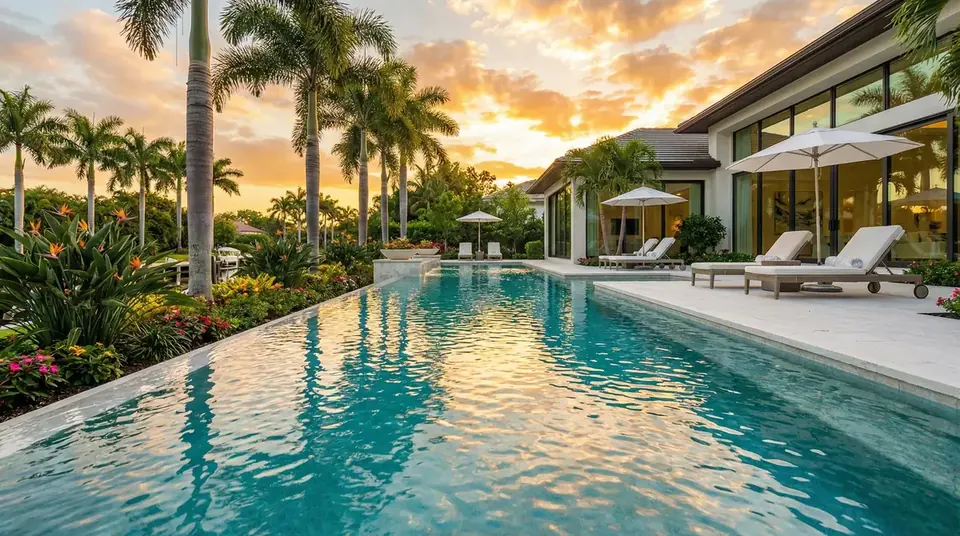
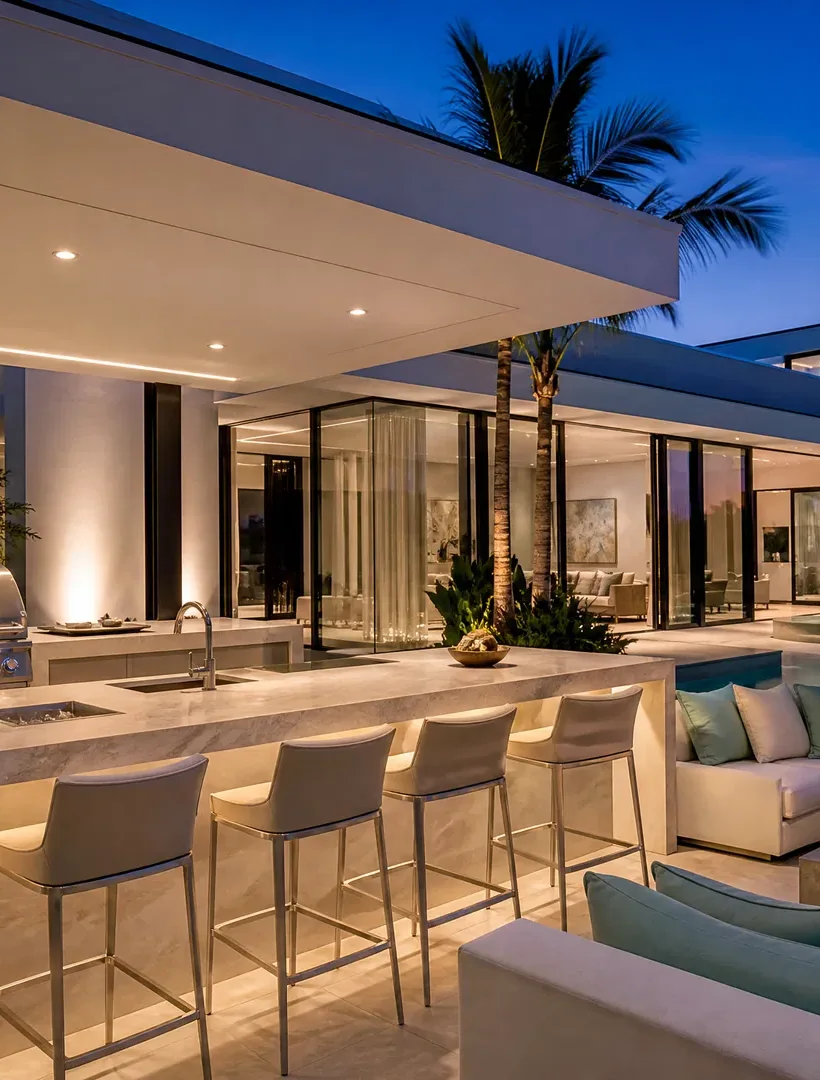
Naples homeowners enjoy 260+ days of outdoor cooking weather per year. An outdoor kitchen transforms your pool area from a place to swim into a complete outdoor living destination — where meals are prepared, guests are entertained, and evenings extend well past sunset around fire features and ambient lighting.
In the Naples luxury market, outdoor kitchens have become an expectation rather than a luxury for homes above $800K. They increase property value 5–20% and deliver ROI of 55–200% depending on quality and integration. The key is building with marine-grade materials engineered for Florida's salt air, UV exposure, and hurricane climate — not residential-grade products that fail within 5 years.
Outdoor cooking days/year
Property value increase
Pre-construction savings
Return on investment
The Pre-Construction Advantage
When you plan your outdoor kitchen during pool construction rather than retrofitting later, you save $7,000–$15,000+ because trenches are already open, concrete crews are on-site, and drainage is being designed from scratch:
Gas Line in Open Trench
Save $2,000–$4,000Route gas alongside pool plumbing during excavation vs. saw-cutting finished deck later
Electrical Conduit in Deck Pour
Save $2,500–$5,000Run conduit for 240V, 120V, and low-voltage during concrete pour — no trenching or patching
Plumbing Stub-Outs
Save $1,500–$3,500Tee off house supply in open trench for sink hot/cold water and drain connection
Structural Footings
Save $2,000–$5,000Pour pergola/pavilion footers simultaneously with pool deck — same crew, same mobilization
Not ready to build yet? Install stub-outs now.
For just $2,000–$3,500 during pool construction, we cap gas, electric, and plumbing connections at your future kitchen location. Build months or years later with minimal disruption. This is our #1 recommendation for homeowners who "might want an outdoor kitchen someday."
We design your pool deck with kitchen infrastructure engineered from day one.
Countertop Materials — What Survives Florida
The #1 most expensive mistake in outdoor kitchens is choosing the wrong countertop material. Florida's combination of intense UV, salt air, humidity, and thermal cycling destroys materials that work perfectly indoors. Here's what actually performs:
Critical Warning: Engineered Quartz Fails Outdoors
Engineered quartz (Caesarstone, Silestone, Cambria, MSI) contains 7% polymer resin that degrades under UV radiation. Visible yellowing appears within 12–18 months in Florida sun. This is irreversible — all manufacturers void outdoor warranties. Don't confuse it with natural quartzite, which has zero resin and performs beautifully outdoors.
| Material | Lifespan | Maintenance | Cost/sqft | UV Safe |
|---|---|---|---|---|
| Sintered Stone (Dekton, Neolith) | 25+ years | Zero — no sealing ever | $150–$250/sqft | |
| Porcelain Slab | 20+ years | Zero — no sealing | $120–$150/sqft | |
| Natural Quartzite | 20+ years | Annual sealing required | $100–$150/sqft | |
| Granite | 15–20 years | Seal every 6–12 months | $45–$100/sqft | |
| Engineered Quartz (Caesarstone, etc.)⚠ AVOID | FAILS in 12–18 months | N/A — not recommended | $60–$120/sqft | ✗ |
Best Zero-Maintenance Choice
Sintered stone (Dekton by Cosentino) — zero porosity, zero UV damage, zero sealing. Must use certified fabricator to avoid micro-fractures.
Best Value Choice
Granite — proven outdoor performer at $45-$100/sqft. Requires annual sealing but handles Florida climate well with proper maintenance.
Cabinet & Frame Materials for Coastal Florida
Standard indoor cabinetry fails rapidly in Florida's 70-90% year-round humidity and salt air. The frame and cabinet material decision depends on your proximity to saltwater, whether the kitchen is covered, and your maintenance tolerance:
HDPE Polymer Cabinets
Best for: Coastal + uncovered installations
- 100% waterproof — will never rot, warp, or rust
- UV-resistant — won't fade or chalk in Florida sun
- Cool to touch — unlike metal in direct sun
- Zero maintenance — wash with hose
- Brands: Werever (made in FL), NatureKast, Danver
$4,000–$15,000+
Concrete Block (CMU) Frame
Best for: Permanent custom islands, heavy countertops
- Fireproof, extremely durable, handles all weather
- Supports heavy countertop materials (granite, sintered stone)
- Finish options: stucco, stone veneer, tile, brick
- Cannot be modified after construction (permanent)
- Requires skilled mason — labor is major cost component
$3,000–$8,000 (frame only)
Decision Framework:
Coastal + uncovered: HDPE polymer or concrete block with marine finish. Coastal + covered: Aluminum (marine powder coat) or concrete block. Inland: Any material works — choose based on budget and aesthetic. Avoid everywhere: Standard wood cabinets, MDF, particleboard, steel studs without marine treatment.
Grill & Appliance Brands by Tier
The grill is the foundation of every outdoor kitchen. In coastal Southwest Florida, you need 304 or 316 stainless steel — lesser grades corrode within 2-3 years of salt air exposure. Here's how the major brands compare:
Premium / Luxury — $5,000–$15,000+
Lynx Professional
ProSear2 infrared searing, WiFi smart grill, made in USA
Alfresco
Best build quality in industry, integrated smoker, ceramic briquette system
Fire Magic
Proven reliability, Aurora & Echelon Diamond lines, made in USA
Twin Eagles
Hex burners, 25,000 BTU/burner, excellent heat distribution
Mid-Range / Best Value — $2,500–$5,000
Summerset
Sizzler Pro & TRL series, great quality-to-price ratio, 304 stainless
Delta Heat
Lynx's value brand — similar engineering at lower price point
Coyote
S-Series (premium) and C-Series (value), solid options
Bull
Popular in Florida, good dealer network, solid mid-range performer
Coastal rule: Within 3,000 feet of saltwater, specify 316 marine-grade stainless steel. Standard 304 develops surface rust within 2-3 years. The difference is 2-3% molybdenum content that resists chloride (salt) corrosion.
Cost Guide — Naples & SWFL (2025–2026)
Outdoor kitchen costs vary enormously based on scope, materials, and appliance choices. Here's what to expect at each tier in the Southwest Florida market:
| Tier | Cost Range | What's Included |
|---|---|---|
| Essential | $15,000 – $30,000 | Built-in grill, basic island, granite countertop, minimal utilities |
| Functional | $30,000 – $55,000 | Premium grill, L-shaped island, sink, refrigerator, gas line, lighting |
| Comprehensive | $55,000 – $90,000 | High-end grill, full appliance suite, sintered stone, shade structure, fire feature |
| Luxury | $90,000 – $200,000+ | Ultra-premium everything, multiple cooking stations, covered pavilion, smart home |
Hidden costs to budget for:
Permit fees ($500–$2,000), structural engineering for covered structures ($1,500–$3,500), gas meter upgrade ($500–$1,500), electrical panel upgrade ($2,000–$5,000), and HOA application fees ($100–$500). Quality quotes include these — beware "base prices" that exclude permitting and engineering.
Screen Enclosures + Outdoor Kitchens
About 90% of SWFL pools have screen enclosures — and this creates a critical design consideration for outdoor kitchens. Gas grills inside screen enclosures are generally prohibited by fire code (NFPA 1). Here are the proven solutions:
Kitchen Outside Screen
Build the outdoor kitchen adjacent to the screen enclosure, with easy access between cooking and pool areas
Pass-Through Opening
Create a dedicated opening in the screen wall for food and drink service between kitchen and pool deck
Kitchen Wing Extension
Design an 'outdoor kitchen wing' that extends beyond the screen enclosure footprint — popular in luxury builds
Covered Kitchen Pavilion
Separate covered structure adjacent to screen enclosure with its own shade, lighting, and seating
Collier County Permitting
Most functional outdoor kitchens require multiple permits in Collier County. Here's what triggers a permit and what doesn't:
Requires Permit
- Any gas line installation (mechanical permit)
- Any electrical work (electrical permit)
- Any plumbing — sink, drain (plumbing permit)
- Any roofed structure — pergola, pavilion (building permit + PE engineering)
- Structures exceeding size thresholds
Typically No Permit
- Freestanding grill island with NO utilities
- Portable/freestanding grills and smokers
- Countertop-only islands under size threshold
Always verify with Collier County Building Department — thresholds vary by zoning district.
Maintenance in SWFL's Coastal Climate
The right materials minimize maintenance, but Florida's environment demands some attention. Here's a realistic maintenance schedule:
Weekly
- • Rinse stainless with fresh water
- • Wipe countertops after use
- • Clean grill grates
- • Empty grease trap
Monthly
- • Deep clean stainless steel
- • Inspect gas connections
- • Clean fridge condenser coils
- • Test GFCI outlets
Quarterly
- • Wax stainless surfaces
- • Lubricate hinges/slides
- • Inspect hood/ventilation
- • Professional grill service
Annually
- • Reseal granite/quartzite
- • Gas line leak test
- • Inspect electrical conduit
- • Post-hurricane assessment
Frequently Asked Questions
No — gas grills inside screen enclosures are generally prohibited by fire code (NFPA 1). The carbon monoxide risk in a semi-enclosed space, fire risk to the aluminum/screen structure, and grease accumulation make it unsafe. Solutions include building the outdoor kitchen outside the screen enclosure adjacent to the pool deck, creating a pass-through opening in the screen wall, or designing an 'outdoor kitchen wing' that extends beyond the screen footprint. Some jurisdictions allow listed electric portable grills under 200 sq inches inside screens.
Engineered quartz (Caesarstone, Silestone, Cambria) contains 7% polymer resin binders that break down under UV radiation — a process called photodegradation. With Florida's UV index of 10-12 in summer, visible yellowing appears within 12-18 months. This is irreversible and cannot be polished out or sealed over. All major manufacturers void their warranty for outdoor use. Many homeowners confuse engineered quartz with quartzite, which is a natural metamorphic rock with zero resin content that performs beautifully outdoors.
In the Naples/SWFL market (2024-2026): A basic grill island with no utilities runs $15,000-$30,000. A functional kitchen with sink, refrigerator, gas line, and lighting runs $30,000-$55,000. A comprehensive setup with premium appliances, shade structure, and fire features runs $55,000-$90,000. Luxury installations with multiple cooking stations, covered pavilions, and smart home integration run $90,000-$200,000+. Budget an additional $3,000-$8,000 for permits, engineering, and potential panel/meter upgrades.
Outdoor kitchens increase home value 5-20% depending on quality and location. ROI ranges from 55% to 200% according to multiple industry sources including the National Association of Realtors. In the Naples luxury market, ROI tends toward the higher end because of year-round outdoor living climate. Key factors for maximum ROI: quality materials that age well, proper permitting (unpermitted work reduces value), and functional layout buyers can envision using. Naples/Marco Island buyers increasingly expect outdoor kitchens in homes above $800K.
It depends on scope. A freestanding grill island with NO utilities (no gas, electric, or plumbing) typically doesn't require a permit. However, any gas line installation requires a mechanical permit, any electrical work requires an electrical permit, any plumbing (sink/drain) requires a plumbing permit, and any roofed structure (pergola, pavilion) requires a building permit with PE-stamped engineering drawings. Most functional outdoor kitchens require multiple permits. HOA architectural review is often required in addition to county permits.
For uncovered coastal installations (within 1 mile of saltwater), HDPE marine-grade polymer cabinets (brands: Werever, NatureKast) are the gold standard — they're 100% waterproof, UV-resistant, won't rot or corrode, and require zero maintenance beyond hosing off. For covered coastal kitchens, marine-grade powder-coated aluminum also works well. Concrete block (CMU) with marine-grade stucco finish is the traditional choice and extremely durable. Avoid standard wood cabinets, MDF, particleboard, and steel studs in coastal environments.
During pool construction, trenches are already open for pool plumbing, concrete crews are already on-site for the deck pour, and grading/drainage is being designed from scratch. Adding gas line stub-outs, electrical conduit, plumbing connections, and structural footings at this stage costs $2,000-$3,500 total. Retrofitting the same infrastructure after the deck is poured requires saw-cutting, trenching, patching, and color-matching — costing $7,000-$15,000+ more. Even if you're not ready to build the kitchen yet, installing stub-outs during pool construction is our #1 recommendation.
For premium/luxury ($5,000-$15,000+): Lynx Professional (smart tech, ProSear2 infrared), Alfresco (best build quality, integrated smoker), Fire Magic (proven reliability, made in USA), and Twin Eagles (high-heat, excellent distribution). Mid-range best value ($2,500-$5,000): Summerset Sizzler Pro, Delta Heat (Lynx's value brand), Coyote S-Series, and Bull. All outdoor grills in coastal SWFL must use 304 or 316 stainless steel — lesser grades corrode quickly in salt air. Within 3,000 feet of saltwater, 316 marine-grade is strongly recommended.
Planning a Pool? Think Kitchen From Day One.
We design your pool deck with outdoor kitchen gas, electric, plumbing, and structural footings engineered from the start — saving you $7,000–$15,000+ and delivering a seamless result.